

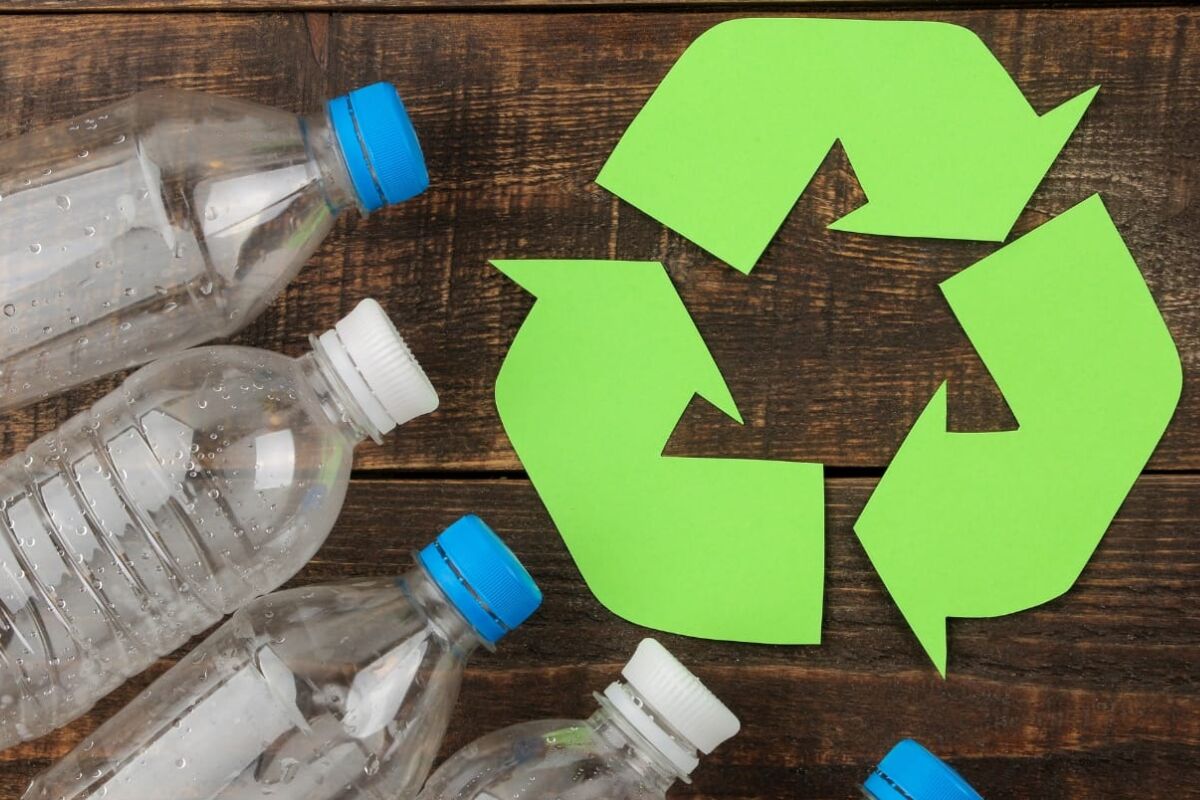
Researcher Riccardo Milanesi, second-place winner at MUSA's "Stand Up Science," describes the biotechnological process that converts post-consumer PET into glycolic acid, opening up a new circular supply chain for the Lombardy cosmetics industry.
Riccardo Milanesi secured second place in the first edition of “Stand Up Science. Bright Ideas for a Bright Future,” the closing event of the MUSA Spoke 1 program. His presentation, titled “Beauty and the Beast: The Story of Waste that Became a Raw Material for the Cosmetics Industry,” tells of an innovative process capable of overturning the narrative surrounding plastic waste. The project was developed at the University of Milan-Bicocca within the Department of Biotechnology and Biosciences.
“The title,” Milanesi explains, “references the fairy tale, but in this case, the ‘Beast’ is the waste: the plastic that conditions our lives and that we use massively. In particular, PET, a material that is omnipresent in our daily consumption.”
Milanesi starts with a finding: not all plastics are recyclable, and even when they are, traditional recycling involves a significant loss of quality. “The result is what we technically call downsizing: we obtain a new product, but its market value is lower than the original plastic, which is produced from fossil sources.”
His research group, however, chose to pursue another path: upsizing. “The goal is to take a specific waste product, PET, and not simply reorganize it through physical or thermal processes, but to truly degrade it into its elementary units, thanks to a biological approach.”
While conventional recycling merely melts and re-extrudeds the material, Milanesi’s team exploited the discovery – already present in the literature – of bacterial enzymes capable of breaking down PET. “Nature has adapted to our plastic dispersion,” the researcher observes. “Some bacteria have evolved enzymes that can degrade the polymer chains, releasing the basic monomers.”
Once the degradation products were obtained, the Bicocca group focused its research on one of the two fundamental components of PET: ethylene glycol. “It’s a molecule similar in structure to an alcohol,” Milanesi recounts. “Using selected yeasts, we managed to convert it into glycolic acid, a key ingredient in the cosmetics industry.”
Glycolic acid is commonly used for exfoliating, moisturizing, and cleansing products, and today it comes almost exclusively from fossil sources. The possibility of producing it from plastic waste therefore represents a powerful paradigm shift.
“We conducted laboratory tests on plastic hydrolysates from various types of packaging and implemented an initial transformation process on a laboratory scale,” Milanesi explains. The project then took a further step: “Thanks to collaboration with various partners, we carried out a demonstrative campaign on a pre-industrial scale, using the glycolic acid to formulate a cleansing mousse and a moisturizing cream.”
Lombardy – and the metropolitan area of Milan in particular – is home to one of the most important cosmetics supply chains in Europe. This makes the research not only scientifically innovative but also strategic for the region. “Our biomanufacturing process allows us to take a problem, the PET waste, and transform it into a precious resource for an industry that is deeply rooted in the region,” Milanesi emphasizes. “It is a concrete way to build a new value chain, based on recovered raw materials and not on petroleum derivatives.”
The researcher is already looking to the future: “The process is in the development phase, and further steps will be needed to bring it to an industrial level. But we have demonstrated that it is possible to transform the ‘Beast’ into a valuable ingredient for a high-value-added sector.”