

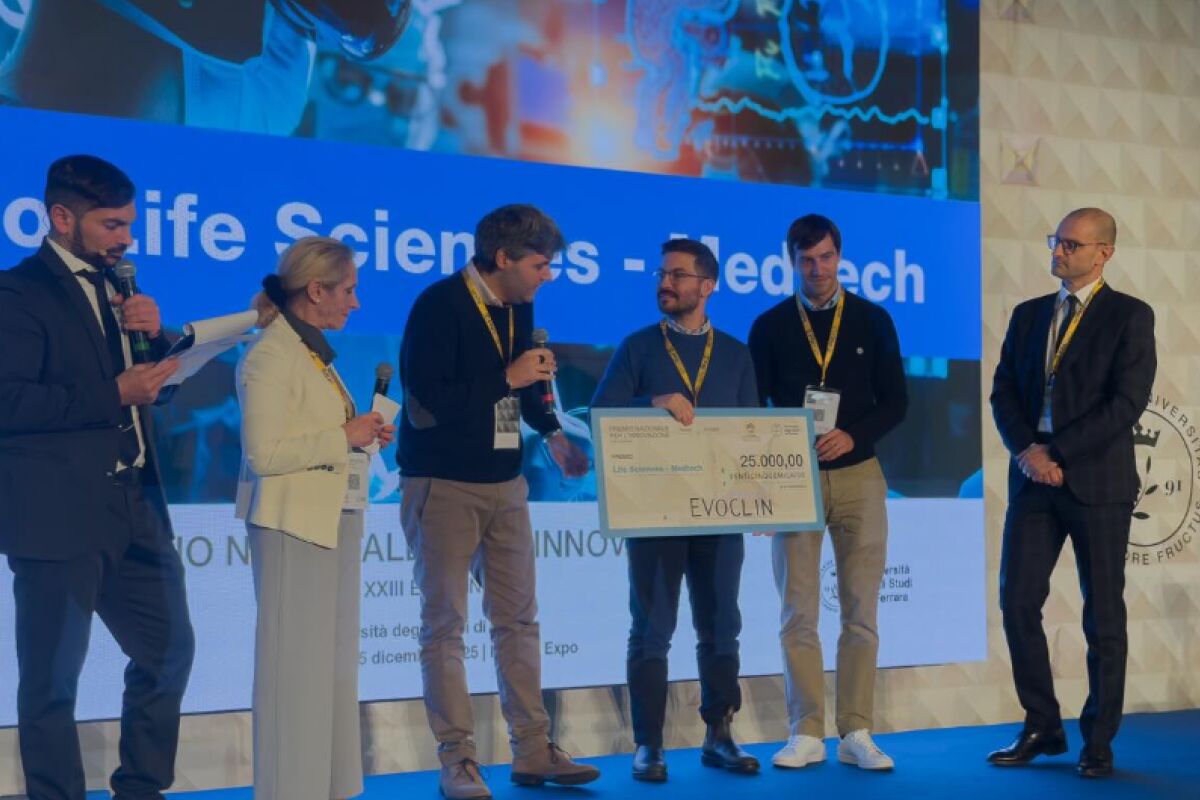
Following Falling Walls Lab Italia and StartCup Lombardia 2025, the university-supported project also wins the highest national recognition in the Life Sciences and MedTech category
EvoClin continues to collect accolades and establishes itself as one of the most promising entities in Italian innovation. After winning one of the prizes at StartCup Lombardia 2025 in the Life Sciences & MedTech category—a competition promoted by MUSA scarl together with universities and incubators in Lombardy—and following its success at Falling Walls Lab Italia, the startup marks another fundamental milestone: the victory of the XXIII National Innovation Award (PNI) in the Life Sciences and MedTech category. This result confirms the scientific robustness and high impact potential of the project, which managed to distinguish itself among the best innovative initiatives at a national level.
EvoClin was created with the objective of revolutionizing the support provided to clinicians in therapeutic decision-making. The project provides predictive tools capable of anticipating the evolution of a tumor and forecasting how patients might respond to different treatments.
What makes this computational ecosystem unique are three patented artificial intelligence frameworks, trained on an imposing dataset comprising the data of over 100,000 patients. Thanks to this wealth of information, EvoClin is able to predict future genetic mutations, estimate the evolution and possible resistance of diseases, and suggest personalized therapeutic strategies.
Another key element is the simplicity of use: the system only requires standard sequencing data, which is already routinely collected in the diagnostic phase in hospitals, making implementation immediate and without the need for additional infrastructure.
The victory at the National Innovation Award represents the third major result for EvoClin in just a few months and testifies to the ability of the university ecosystem to generate high social impact innovation. The project demonstrates how the alliance between research, technology, and clinical expertise can open new pathways in predictive and personalized medicine.