

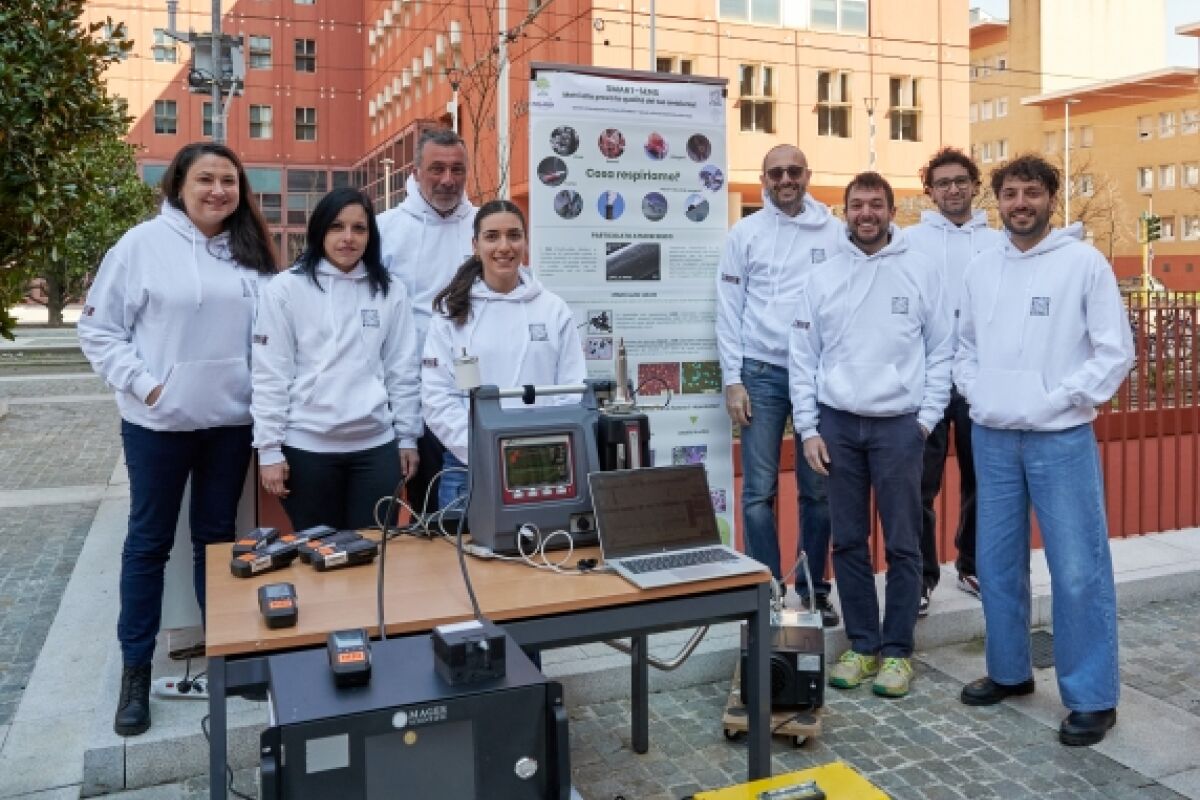
At Berlin Science Week, MUSA presents a low-cost, wearable prototype designed for real-time monitoring of pollution and health risks.
At Berlin Science Week, MUSA showcased one of its most emblematic projects—one that seamlessly blends scientific research, technological innovation, and social impact. Named RESPIRO, the device is a low-cost wearable designed to monitor air quality and personal exposure to pollutants in real time throughout the day.
The prototype was presented by Luca Ferrero, a professor at the University of Milano-Bicocca (Department of Earth and Environmental Sciences). He illustrated how RESPIRO perfectly aligns with MUSA’s vision for urban regeneration and sustainability.
RESPIRO is built on low-cost sensor technology capable of detecting various environmental parameters in real time: particulate and gaseous pollutants, microclimatic conditions, and key variables essential to understanding the quality of the air we breathe daily. The wearable device transmits data via smartphone, utilizing GPS geolocation to create a detailed reconstruction of an individual’s exposure to pollutants over a 24-hour period.
This continuous measurement is more than just a technological exercise; it is a crucial step in linking the environment to health. Understanding exactly what levels of pollution one is exposed to means better understanding the potential effects on physical well-being and gaining concrete tools for action. As Ferrero explained, this awareness empowers people to modify their lifestyles, urban routes, and the environments they frequent, thereby reducing their daily dose of pollutants.
The value of RESPIRO, however, extends beyond the individual. The project is designed with a citizen science approach: data is not restricted to the user but becomes a collective asset. The widespread use of these devices allows for the collection of massive amounts of environmental information across large areas, creating invaluable databases for advanced analysis.
These datasets can be utilized for:
-
Environmental Epidemiology: Studying the correlations between pollution and health.
-
Sustainable Mobility: Supporting policies for greener transport.
-
Urban Planning: Informing more conscious urbanization processes.
-
Interdisciplinary Research: Bridging the gap between environmental and social sciences.
In this sense, RESPIRO acts as a data hub capable of fueling interdisciplinary knowledge and more informed public decision-making.
Developed within the framework of the MUSA project, RESPIRO is the result of a collaboration between the University of Milano-Bicocca, the technological research hub ROAD (Rome Advanced District), and the company XearPro. This synergy demonstrates that innovation for urban sustainability thrives at the intersection of academic research, technology, and business, all with the shared goal of tangibly improving the quality of life in our cities.