

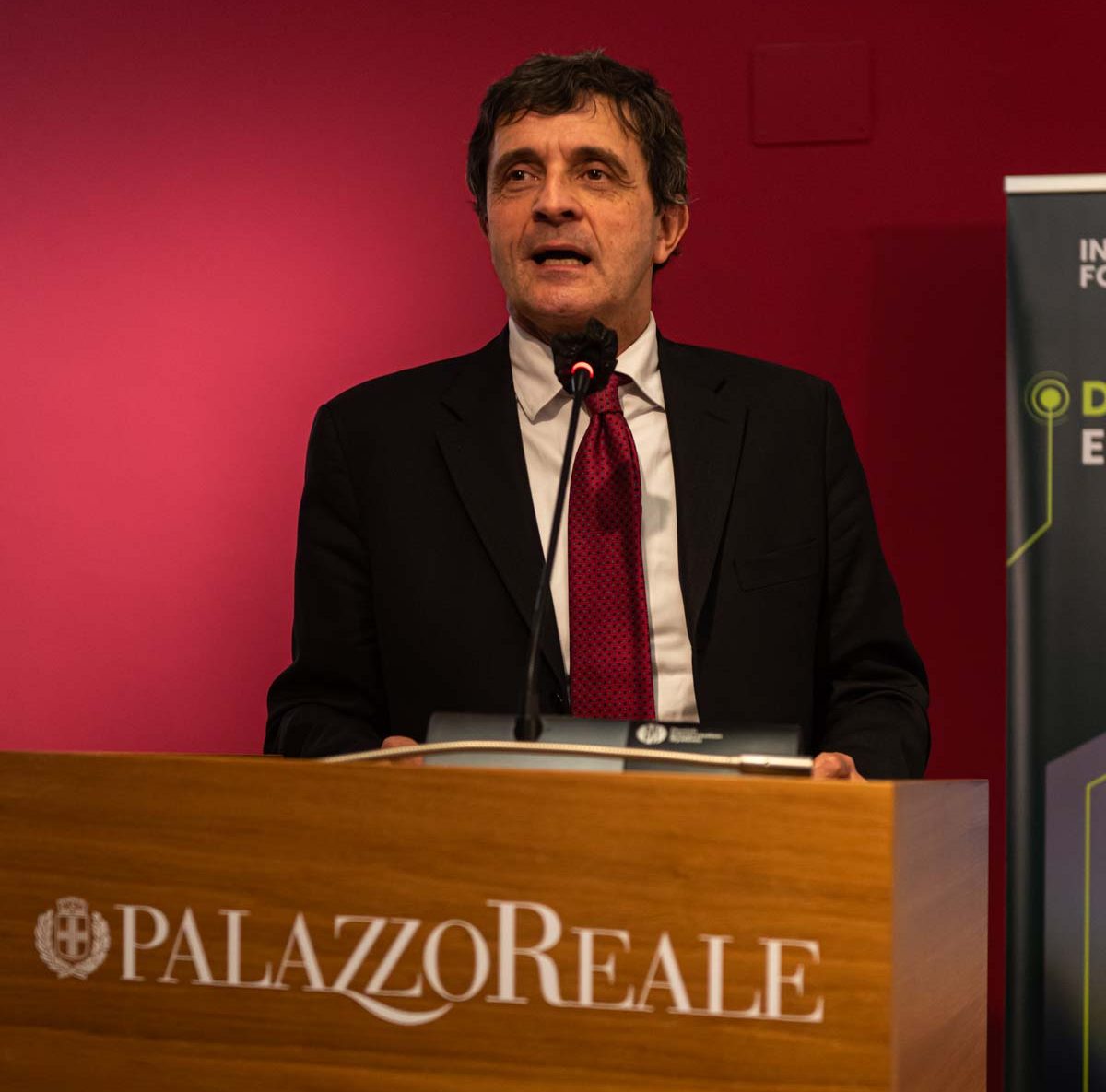
Editorial by Vittorio Biondi, Director of MUSA. The next phase of the ecosystem: transitioning from funded experimentation to a permanent platform for sustainable urban innovation.
MUSA was born in Milan as a response to a profound transformation—neither a theoretical exercise nor a simple research project. It emerged within a city and a region called to address the complexities of the environmental, economic, and social transition, supported by the PNRR (National Recovery and Resilience Plan) and the vision of the Ministry of University and Research. In recent years, MUSA has demonstrated that a public-private ecosystem, when well-orchestrated, can produce knowledge, experimentation, and impact without getting lost in fragmentation. The next phase, therefore, is not a restart, but a transition to maturity.
The numbers tell a solid story: over 110 million euros allocated, more than 120 research lines, a broad and multidisciplinary community of researchers, dozens of public and private partners, significant scientific output, and a constant presence in international forums where innovation is debated and built. However, MUSA’s value is not measured solely in outputs: it lies primarily in having created a space for genuine collaboration between universities, businesses, public administrations, and civil society, capable of bridging scientific rigor, field experimentation, and social impact.
The six-Spoke structure has allowed us to tackle urban sustainability as a multi-level phenomenon: from urban regeneration to big data for life sciences, from deep tech to sustainable finance, and from responsible fashion and design to innovation for inclusive societies. This framework succeeded because it did not remain compartmentalized; instead, it fostered countless cross-pollinations and convergences. Over these three years, the initial project evolved, showcasing a vitality entirely consistent with the original spirit of the PNRR. The transition beyond the Spoke structure and the addition of two new academic partners (Università Cattolica and LIUC) in the project’s final year are clear evidence of this. This is precisely where the challenge of the next phase arises: preserving this wealth of knowledge while avoiding dispersion.
The feedback gathered since September from partners and stakeholders is clear: MUSA is recognized as a credible hub for integration. However, to achieve a leap in scale, it must make choices. Mission continuity, effective governance, focus, and structured engagement are not just slogans—they are necessary conditions for transforming a PNRR-born project into a permanent innovation infrastructure. This means establishing a lean steering committee with operational decision-making power and concentrating energy and resources on a select number of “champion” projects capable of generating measurable impact and recognition beyond local borders.
In this journey, the role of businesses is also set to change. They are no longer just interlocutors or indirect beneficiaries of research, but co-investors and problem-solving partners, structurally involved along the entire chain from conception to implementation. At the same time, active local communities and third-sector organizations must become co-protagonists. Urban sustainability depends on the ability to co-design with those who represent social needs, translating innovation into accessible and transferable solutions for society.
The three pillars for MUSA’s future outline a clear trajectory:
-
The public-private model has proven effective and replicable, as it empowers all actors without overlaps or conflicts of interest.
-
Thematic specialization in multi-layered urban sustainability offers a competitive edge over other ecosystems, aligning with the priorities of Lombardy’s Smart Specialization Strategy and the European agenda.
-
Human capital, developed by ecosystem partners, represents the most valuable asset: scientific expertise, established networks, and governance processes that make the ecosystem ready to scale at national and European levels.
MUSA’s value proposition must be viewed in this light. It is not a platform offering a single technology, but an agile infrastructure that enables collaborations, integrates skills and resources, promotes pilot projects, and disseminates best practices in urban sustainability innovation. It is an interdisciplinary approach that unites technology, social dimensions, finance, and design, drawing strength from its ability to connect diverse worlds.
Looking at the operational horizon of the next three years, the phases are clearly defined: first, the sharing of the project to align visions and expectations; then, the launch to make the new positioning visible and recognizable. Subsequently, development and consolidation will demonstrate that MUSA can sustain itself beyond the initial PNRR push, through economic models that can be activated gradually and projects capable of attracting both public and private resources.
If MUSA leaves a legacy for the debate on urban innovation, it is that sustainability is not built by adding initiatives, but by integrating visions. The next phase will be decisive for this very reason: transforming a successful experience into a light but stable infrastructure capable of supporting Milan, Lombardy, and beyond in the challenges to come. No longer just a project responding to change, but an ecosystem that anticipates and promotes it.