

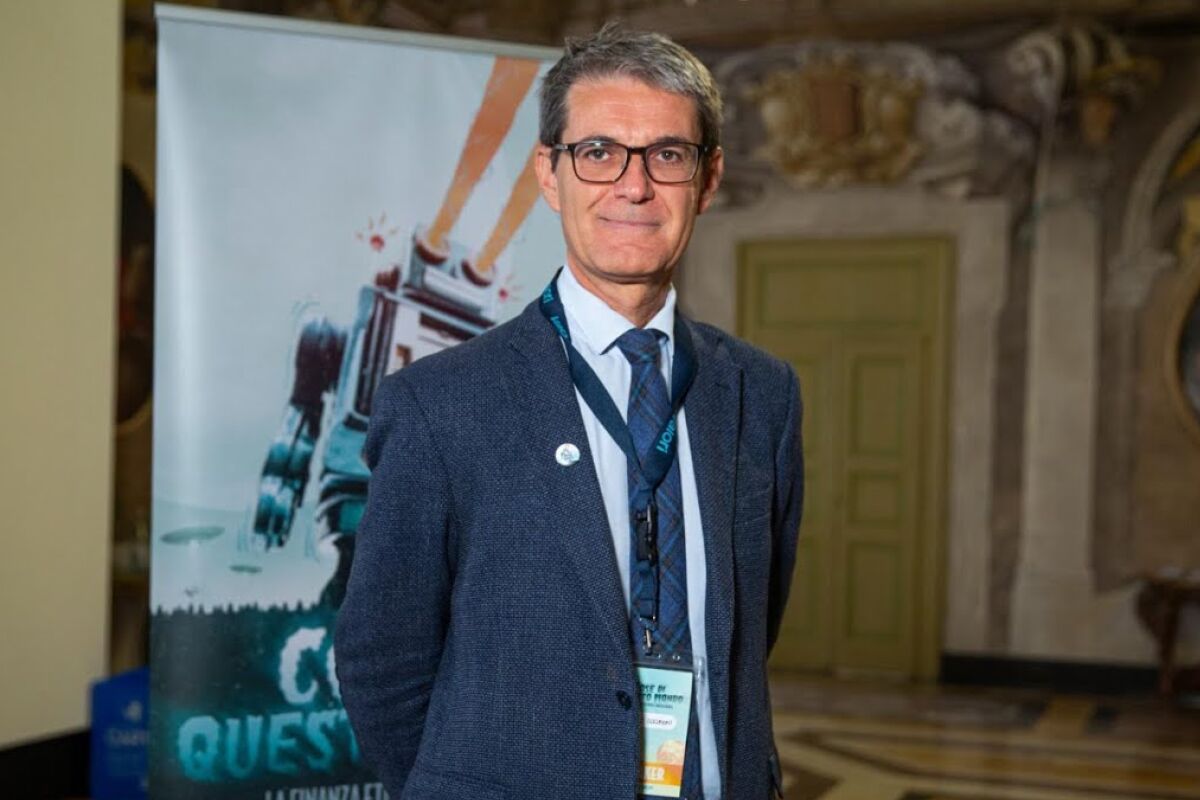
Professor Matteo Colleoni discusses the MUSA research on mobility: an innovative model to interpret travel flows and design interventions that are more accessible, safe, and sustainable.
Mobility is one of the central pillars of MUSA and represents a strategic lever to rethink the relationship between the university and the city. This was explained by Matteo Colleoni, Full Professor of Urban Studies at the University of Milano-Bicocca and delegate for sustainability and mobility management, during an event dedicated to analyzing travel flows within the university district.
At the heart of the research is an unprecedented effort in data integration, never before trialed on this scale. The study group crossed information from diverse sources: from Home-to-Work Travel Plans (which universities and companies with over 100 employees are legally required to draft) and structural transportation flow data, to mobile phone data acquired through project funding. This heterogeneous information pool allowed for precise observation of systematic mobility—specifically home-to-work and home-to-university commutes.
Thanks to this integration, it was possible for the first time to obtain a realistic snapshot of the inbound and outbound flows of the district, relating temporary presence with resident populations. This result goes beyond local analysis: the model developed is intended as a replicable prototype for other high-density areas, particularly other university districts in Milan. The goal is to build solid knowledge of mobility demand, both at the neighborhood level and in relation to different transport systems, to guide more effective policies and interventions.
The study reveals an overall positive picture: the modal split of travel in the university district is quite virtuous, with a significant share of public transport usage and a more limited presence of private car transport. However, cycling and pedestrian mobility are lower, collectively not exceeding 5%. This figure is clearly explained by the average travel distance of students, which is around 30 kilometers, making it difficult to rely solely on active mobility without some form of intermodality.
For this reason, the research did not stop at interpreting flows but delved into the themes of walkability and district accessibility. Through specific studies on walkability, the working group is evaluating not only access to university facilities but also the overall usability of spaces and services in the area.
The ultimate goal is to translate data into concrete actions. On one hand, structural interventions capable of rethinking the spatial organization of the district, making it more accessible by public transport and more favorable to active mobility (walking and cycling). On the other hand, measures targeted at safety, such as reducing vehicle flow speeds, securing pedestrian crossings, and ensuring protected pathways to major places of study and work.