

Photocatalytic coatings to improve air quality, building performance, and urban well-being: the winning poster session project by Stefania Carraro and Fabio Di Liberto.
Improving urban air quality without consuming new land, altering the cityscape, or compromising architectural aesthetics, all while integrating environmental, social, and energy sustainability. This is the vision at the heart of Design Invisible Forests, the winning poster session project developed by Stefania Carraro, Senior Lecturer of Sustainability at Bocconi University, in collaboration with Fabio Di Liberto.
The research introduces a technological innovation for urban environments: the use of transparent photocatalytic coatings. These coatings can be applied directly to building façades and glass surfaces. They act as “invisible forests,” capable of breaking down a significant portion of the most common atmospheric pollutants found in cities, particularly nitrogen oxides ($NO_x$) and volatile organic compounds (VOCs).
The mechanism is simple yet highly effective. Through photocatalytic processes, the coatings reduce air pollutants, enhancing the surrounding urban environment. Simultaneously, the technology positively impacts building performance by providing greater protection against weathering, reducing maintenance costs, and contributing to better energy efficiency—leading to lower internal energy consumption.
The project’s value extends beyond the environment. Design Invisible Forests prompts a broader reflection on social sustainability; by addressing air quality, the project directly impacts the health and daily well-being of those living and working in urban spaces. Improving the built environment thus becomes a tangible way to enhance citizens’ quality of life.
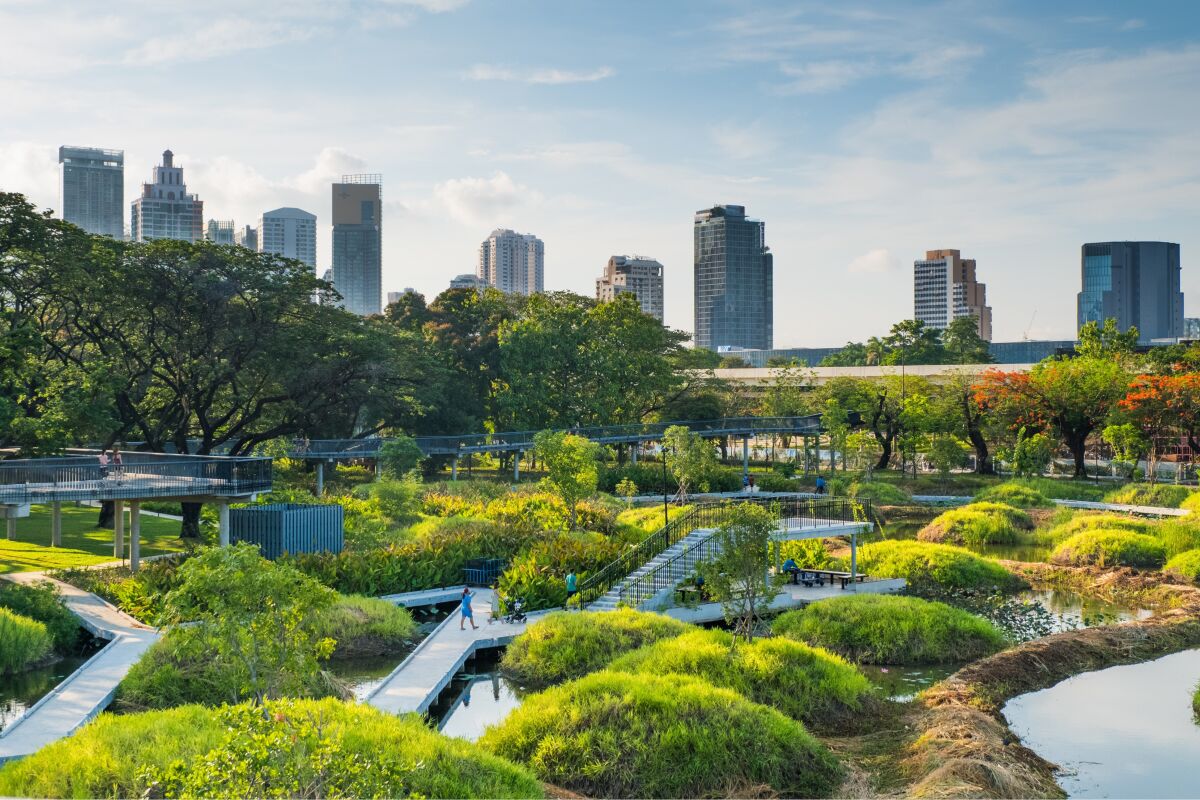
Designed to be scalable and applicable on a large scale, the project tackles one of the greatest challenges of contemporary cities: integrating “green” solutions even where parks and green spaces are limited or difficult to create. In this way, “invisible forests” become a widespread sustainable infrastructure, capable of transforming existing surfaces into allies for the urban ecological transition.