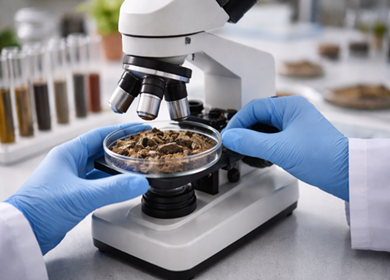
The study stems from a well-known challenge: traditional methods for analyzing soil biodiversity are accurate, but they require long timeframes, specialized expertise, and high costs. Moreover, many standard ecotoxicological tests fail to effectively capture real changes in soil ecological functionality, especially in complex urban contexts.
To address this challenge, the researchers propose the use of behavioral bioassays as first-tier screening tools – that is, as a preliminary level of assessment to rapidly identify signals of environmental degradation. The idea is simple yet powerful: observing how key soil organisms respond to environmental conditions can provide early and sensitive indications of ecosystem health.
The case study: urban green areas as open-air laboratories
The research was conducted as a pilot study in three urban green areas on the campus of the University of Milano-Bicocca, characterized by different levels of anthropogenic disturbance. A real urban context, fully aligned with MUSA’s approach, which promotes the city as a living laboratory for environmental sustainability solutions.
The work integrated three levels of analysis:
-
Behavioral bioassays on soil organisms with different ecological roles;
-
Analysis of soil invertebrate biodiversity (structural and functional) and microbial communities through bacterial DNA sequencing;
-
Physico-chemical characterization of the soil, including parameters such as pH, organic matter content, and water retention capacity.
What organism behavior reveals
The results clearly show that the behavior of soil organisms – particularly avoidance and disaggregation responses—effectively reflects differences in ecological quality across the studied areas.
These behavioral signals are often more sensitive and immediate than some traditional biodiversity indices, allowing early detection of ecological degradation. The relationship with microbial biodiversity, however, appears more complex and less direct, highlighting the need for further investigation.
Why this study is relevant for MUSA
The findings reinforce a core vision of MUSA: the transition toward more sustainable cities requires integrated, scalable monitoring tools that can be applied directly in the field.
Within a European regulatory framework increasingly focused on soil protection – from the Green Deal to forthcoming directives on Soil Monitoring and Resilience – these tools can support public administrations and decision-makers in:
-
Identifying degraded urban areas;
-
Defining intervention priorities;
-
Assessing the effectiveness of renaturalization and green management strategies.
Towards more efficient monitoring systems
The study’s conclusion is clear: combining multiple behavioral bioassays represents a promising approach to assessing the ecological functionality of urban soils. The goal is not to replace traditional analyses, but to complement them with more agile tools capable of guiding environmental management decisions quickly and effectively.
For MUSA, this work represents a concrete example of how scientific research can be translated into operational solutions for urban sustainability, helping to build more resilient, aware, and data-driven cities.